You're in a checkout flow, the customer has entered a VAT ID, and the billing engine is deciding whether to charge tax or reverse charge. The invoice prints cleanly, the order ships, and then finance notices the wrong treatment on a Belfast B2B account because the system treated an XI number like a regular GB number. That's the bug that keeps showing up in SaaS billing stacks, and it usually starts with a validator that thinks every vat id for UK logic is the same.
Table of Contents
- Why the UK VAT ID Is Not Just Another Identifier
- What a UK VAT ID Actually Is
- Format, Regex, and Worked Examples
- Validating a UK VAT ID Programmatically
- Brexit and the GB Versus XI Split
- Choosing HMRC Direct, VIES, or a Validation API
- Why Jurisdiction-Aware Routing Matters
- SaaS Billing Edge Cases That Break Generics
- Audit Evidence and What to Log
- Three Real Billing Failures and Their Fixes
- Quick Reference Cheat Sheet
Why the UK VAT ID Is Not Just Another Identifier
The failure mode is simple. A developer sees a field called VAT number, normalizes the string, and sends it down the same path as every other European tax ID. That works until a Northern Ireland buyer enters an XI number, the checkout logic routes it like a Great Britain customer, and the invoice ends up with the wrong tax treatment.
The mistake that breaks production
What breaks isn't the regex first, it's the assumption behind the regex. GB and XI are not interchangeable labels, and since Brexit they don't point to the same validation path or the same compliance outcome. If your app only asks “is this a UK VAT ID?”, you've already skipped the decision that matters most.
Practical rule: validate the structure second, route the jurisdiction first.
This is why the problem feels small in the UI and expensive in finance. A checkout screen can look perfect while the ledger is wrong, the reverse-charge indicator is missing, or the tax evidence is incomplete. Once that happens, the billable mistake gets replayed in refunds, credits, and invoice corrections.
The rest of the article is the developer's version of a guardrail. It focuses on the split between GB and XI, the format you should accept, the authority you should query, and the audit trail you should keep so your billing system doesn't guess under pressure.
What a UK VAT ID Actually Is
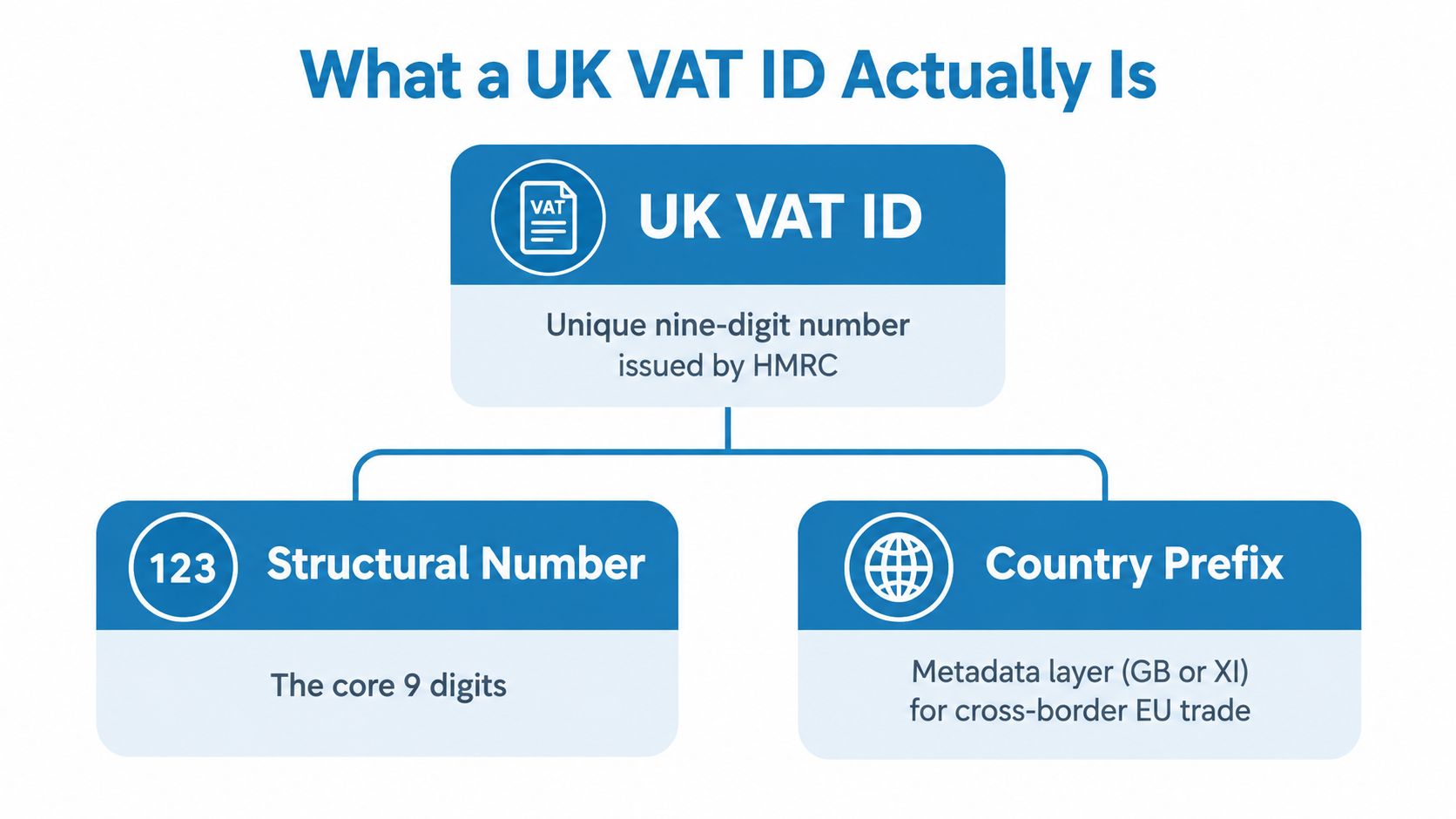
A UK VAT registration number is a unique nine-digit identifier issued by HM Revenue & Customs. That number is the core identity, while GB or XI is prefix metadata layered on top for the transaction context. HMRC's guidance also makes clear that the number must appear on VAT invoices for VAT-registered businesses.
Don't confuse the tax IDs
A VAT ID is not the same thing as a company number, a UTR, or an EORI. In a billing system, those belong to different validation rules, different authorities, and different workflows. If you merge them into one “business ID” field, downstream automation gets messy fast.
A good mental model is this, the nine digits identify the VAT registration, and the prefix tells you how to treat it in cross-border logic. For ordinary UK cross-border supplies, that prefix is usually GB. For Northern Ireland goods activity covered by the post-Brexit rules, it can be XI.
If you're wiring this into a checkout or invoicing flow, the safest pattern is to store the raw input, the normalized prefix, and the normalized nine digits separately. That way your validation layer can decide whether it has a standard UK registration or an XI-eligible Northern Ireland case without destroying the original evidence.
Here's a useful reference on the format side, VAT number format for UK systems.
Format, Regex, and Worked Examples
A strict UK VAT validator should accept both prefixed and unprefixed input, but it should never blur the distinction between the prefix and the digits. The usual normalization rules are boring, and that's exactly why they matter. Strip spaces, hyphens, and case differences, then validate the shape.
Good examples and bad assumptions
Valid examples include GB123456789, GB 123456789, XI123456789, and XI 123456789. A strict matcher should reject anything that changes the nine digits, adds letters inside the numeric block, or swaps the prefix for something unrelated.
A practical set of regexes looks like this:
- Strict with prefix:
^(GB|XI)\s?\d{9}$ - Lenient with punctuation removed first:
^(GB|XI)\d{9}$ - Numeric-only after prefix extraction:
^\d{9}$
The key is the order. Normalize first, then extract prefix, then check the nine digits. If you try to validate a raw user string before trimming punctuation, you'll end up rejecting good inputs like gb-123456789 for no compliance gain.
The split is easy to see in a worked deconstruction. In GB123456789, GB is routing metadata, and 123456789 is the underlying registration. In XI123456789, the digits stay the same shape, but the prefix changes the jurisdictional path for Northern Ireland goods handling.
For teams that like to pin one reference next to the code, the VAT number format guide is handy when you're designing the parser.
Validating a UK VAT ID Programmatically

The biggest production mistake is treating format validation as proof. It isn't. HMRC's own checker, or a wrapper that uses it, is what tells you whether the number is currently valid and whether the registered details match. The fact that a VAT ID looks right on screen says nothing about whether it should be trusted.
A clean validation flow
A solid flow looks like this:
- Receive the input as the user typed it.
- Normalize spaces, case, and punctuation.
- Extract the prefix and preserve it separately.
- Check the structural pattern for the nine digits.
- Route to the correct authority for the prefix and transaction context.
- Store the result with the timestamp and returned identity data.
A compact response object should be machine-readable, not hand-wavy. Good systems return fields such as status, country_prefix, vat_number, validated_at, and source. Error responses should carry codes like format_invalid, not_found, or service_unavailable, because your billing code shouldn't have to parse prose.
If the checker is down, fail closed for exemption and log the outage separately.
The video below is useful if you want to sanity-check the implementation pattern against a working integration mindset.
Format checks are still worth doing because they keep obvious junk out of the remote lookup path. But the remote lookup is the point where compliance starts, because that's the moment you know whether the number is live and whether the business name or address lines up with what the customer typed. For invoice generation, that difference matters more than the regex ever will.
Brexit and the GB Versus XI Split
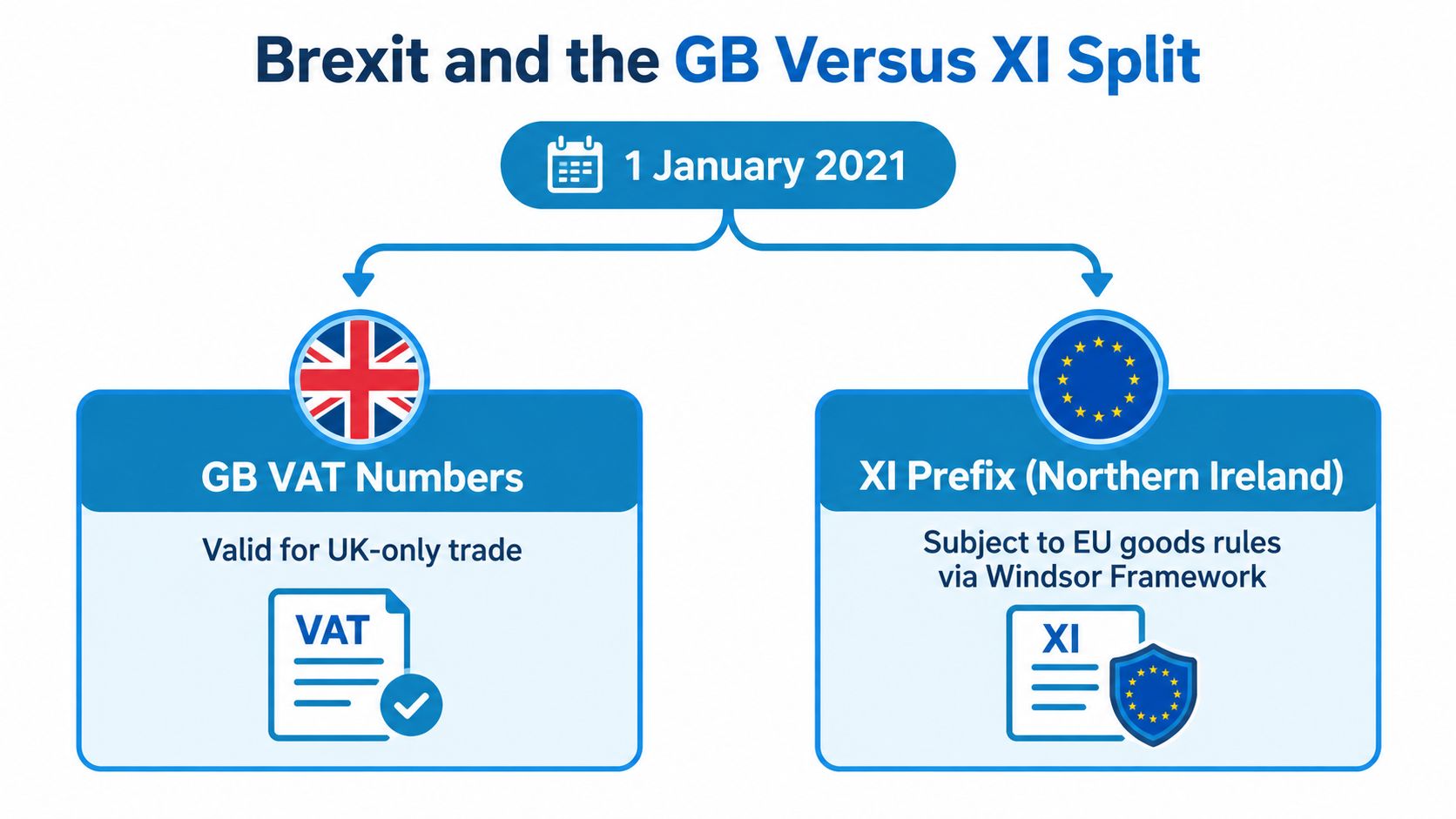
The cut-off matters because the VAT stack changed when the Brexit transition ended on 31 December 2020. Since then, GB numbers and XI numbers have not lived in the same validation world. The UK government says XI is used for relevant goods movements between Northern Ireland and the EU, and the underlying registration number remains the business's nine-digit VAT number.
What changed in practice
For developers, the most important shift is routing. GB VAT numbers are no longer validated through the EU VIES service, while eligible XI numbers can still participate in EU VAT systems for the Northern Ireland goods cases that the Windsor Framework covers. If you ignore that difference, your code will send the wrong identifier to the wrong checker.
That means the prefix isn't cosmetic. It decides whether your checkout logic should talk to HMRC-style UK validation, EU-side validation for the relevant goods case, or a wrapper that knows how to branch correctly. A single “UK VAT” function is too blunt for that job.
The good implementation choice is to treat prefix as request context, not as data decoration. You keep the nine-digit number, but you never drop the prefix until after routing is complete. That's the only way to avoid forcing Northern Ireland trade into a Great Britain-only path.
For a related implementation view, intra-community VAT number handling for the UK is worth keeping nearby when you're encoding the edge cases.
Choosing HMRC Direct, VIES, or a Validation API
The hard choice is not whether to validate, it's where to send the validation request and how much failure you want to own in production.
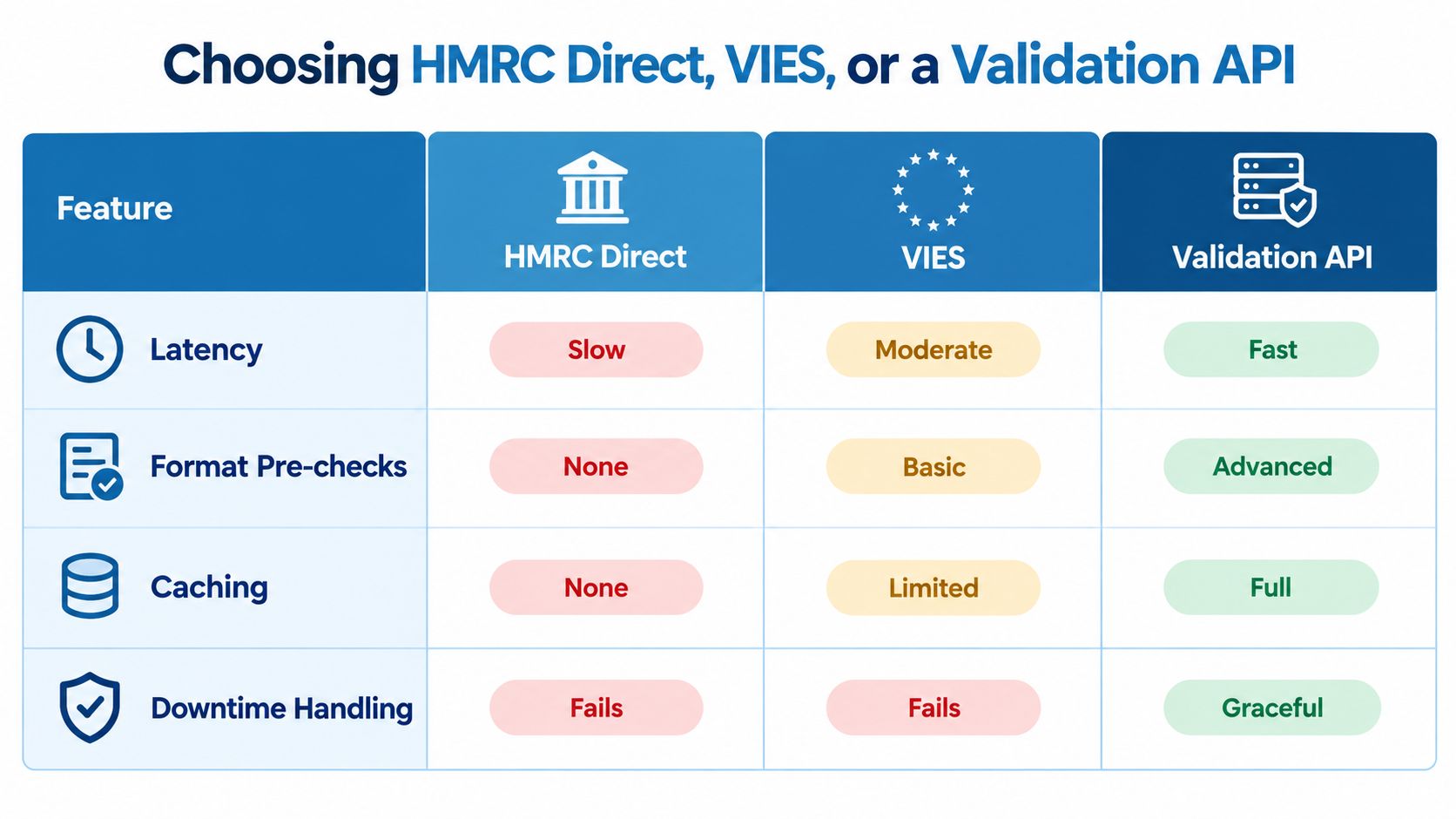
| Option | Best for | Latency profile | Format pre-check | Downtime behaviour |
|---|---|---|---|---|
| HMRC Direct | Teams that want to own the full lookup path | Slow | None | Fails hard if the service is unavailable |
| Raw VIES | EU-focused workflows with their own plumbing | Moderate | Basic | Fails hard when the service is unavailable |
| Validation API | SaaS, marketplaces, and billing systems that need clean JSON and routing | Fast for cached lookups | Advanced | Graceful handling with normalized errors |
A developer-first wrapper like TaxID sits in the third column here. It adds country-specific format checks before remote calls, returns structured JSON, and standardizes failures so billing code can branch on machine-readable outcomes instead of brittle text. That's especially useful when Stripe-style error handling already exists in your stack.
If you're shipping a platform product, a wrapper usually beats one-off lookup code because you can keep the integration surface small while preserving auditability. If you're a large enterprise with a heavy tax team and strict internal controls, direct authority calls may still make sense, but you'll own more reliability work. For a quick implementation comparison, verify VAT ID workflows are easier to reason about when the failure modes are already normalized.
Why Jurisdiction-Aware Routing Matters
A single generic validateUKVat() function is a compliance liability once your app sells across Great Britain and Northern Ireland. The prefix belongs in the request context, because the validator can't infer the transaction logic by itself. If you pass the same identifier to every checker, you'll eventually mis-handle a reverse-charge workflow or an XI goods case.
The right mental model is simple. GB routes to UK-side validation, XI routes through the EU-facing path for the qualifying goods scenarios, and the billing decision sits above the validator. That layering keeps your code honest about what it knows and what it only assumes.
Implementation rule: the validator should confirm structure and status, the routing layer should decide jurisdiction.
This is also where architecture and market entry start to overlap. If your company is expanding into the UK and the EU at the same time, you need to think like a systems designer, not just a tax parser. A useful external perspective on that kind of sequencing is compare market entry modes, because the same question keeps appearing in your billing stack: which country's rulebook governs this transaction?
The objection is usually, “We'll just use a wrapper and let it sort itself out.” That still doesn't remove the need to send the right prefix and the right context. A wrapper can only route correctly if you tell it whether this is GB trade, XI goods activity, or a different country altogether.
SaaS Billing Edge Cases That Break Generics
A generic validator usually fails in places where the invoice logic, not the format, is the actual problem. Services-only B2B supplies can trigger reverse-charge handling, while mixed supplies need more careful treatment because one line item may belong on a different tax path than another.
The edge cases that cost real money
- Northern Ireland goods movements: A generic “UK” branch often treats Belfast like London and skips the XI distinction.
- Services-only B2B supplies: The validator may accept the VAT ID, but the billing engine still has to decide whether reverse charge applies.
- Marketplaces: The platform is not always the supplier, so the VAT ID on the order isn't the whole legal picture.
- B2B versus B2C detection: A valid VAT number doesn't prove the transaction is business-to-business.
- Trading names: The customer can trade under a name that differs from the registered legal name, so name mismatch alone isn't always fraud.
- Refunds and credits: If the original invoice was exempted incorrectly, the correction needs to preserve the original validation evidence.
A generic validator tends to say “valid” and stop there. That's the wrong stopping point. The billing system still needs to know whether to apply reverse charge, whether the supplier role belongs to the platform or the seller, and whether a refund should inherit the original tax treatment or issue a corrected one.
The safest pattern is to keep validation and tax determination separate. Validation answers “is this ID structurally and authoritatively acceptable?”, while taxation answers “what should this line item do?”. Confusing the two is how checkouts drift into recurring remediation work.
Audit Evidence and What to Log
Every validation attempt should leave a trail that survives a finance review. At minimum, log the timestamp, the authority used, the returned identifier, the returned business name and address, the prefix used for routing, the request IP, and a durable reference to the lookup result. Those fields protect you when a customer disputes treatment or when internal finance wants to prove why the order was exempted.
What to keep on file
- Validation timestamp: proves when the check happened.
- Source authority: shows which checker made the decision.
- Returned identity data: supports invoice and reverse-charge evidence.
- Routing prefix: explains why GB or XI was used.
- Request IP: helps investigate abuse or mistaken submissions.
- Screenshot or PDF reference: gives a human-readable record for audit review.
HMRC record-keeping is a long game, so store validation evidence with the same seriousness as invoices and VAT returns. A practical engineering checklist is simple: capture the lookup result, persist the normalized prefix, store the response code, and make sure the data can be replayed during a support or finance audit.
Keep the audit trail attached to the order, not buried in application logs.
Three Real Billing Failures and Their Fixes
A marketplace once treated a Belfast buyer like a Dublin buyer because the code only saw “UK VAT”. The order went through with the wrong exemption path, and the finance team had to unwind the invoice later. The fix was to route XI explicitly before tax logic ran.
Another SaaS accepted a GB number from a Northern Ireland services customer and applied a blanket reverse charge rule. The VAT ID was structurally fine, but the transaction context was wrong for the workflow the team had built. The fix was to separate number validity from supply-type logic and make the checkout ask, “what kind of transaction is this?”
A third team validated the format, stored the result as if it were final, and never checked current validity. That looked harmless until a refund review exposed that the original exemption had been granted on stale data. The fix was to call the authoritative checker, keep the lookup evidence, and refuse to treat a regex match as proof.
In all three cases, the surface bug was small. The actual failure was letting one generic VAT branch decide things it wasn't qualified to decide.
Quick Reference Cheat Sheet
- Structure: GB123456789 or XI123456789, with the nine digits as the core identifier.
- Regex: use a prefix-aware pattern like
^(GB|XI)\s?\d{9}$after normalizing spaces and punctuation. - Routing rule: GB for ordinary UK cross-border logic, XI for qualifying Northern Ireland goods flows.
- Validation rule: format is not proof, call the authoritative checker and store the response.
- Audit fields: timestamp, source, returned name, returned address, prefix used, and lookup reference.
- Decision rule: if the transaction context is Northern Ireland goods with EU-facing treatment, preserve XI. If it's ordinary UK VAT handling, preserve GB.
If you want a cleaner way to validate GB and XI numbers without building the routing and evidence layer from scratch, TaxID gives you a developer-first API for structured VAT checks, returned identity data, and machine-readable errors. It fits the exact billing problems in this article, especially when you need the validator, the routing logic, and the audit trail to agree.