A checkout flow has two different questions to answer. First, is the VAT or company number valid for the transaction? Second, what else does the business do, where does it operate, who controls it, and is it a suitable prospect or supplier? Those questions look similar in a product brief, but they require different data layers.
A company lookup API may validate an identifier against an official register, normalize a legal name, retrieve filings, or enrich a record with firmographics and commercial signals. Those are not interchangeable jobs. VAT validation confirms tax registration. Official registry lookup verifies legal identity within a specific jurisdiction. Identity normalization helps match records across systems. Sales enrichment adds information that may be useful operationally but usually isn't authoritative for legal or tax decisions.
This roundup compares ten options by the decision developers face: authority, geographic coverage, returned fields, freshness, caching, outage behavior, integration model, pricing transparency, and implementation effort. No single API here covers every use case. A billing system may need VIES-backed validation and predictable failure codes, while a sales platform may care more about funding, contacts, leadership, or firmographics.
For a wider look at adjacent data products, you can also browse WebscrapingHQ's company data tools. The shortlist below starts with a developer-oriented VAT layer, then moves through official registers, identity systems, commercial aggregators, and enrichment platforms.
Table of Contents
- 1. TaxID
- 2. OpenCorporates API
- 3. UK Companies House Public Data API
- 4. GLEIF LEI Lookup API
- 5. INSEE SIRENE API
- 6. Pappers Enterprise API
- 7. Enigma Businesses API
- 8. Data Axle Business Database APIs
- 9. Crunchbase API
- 10. EU VIES VAT Information Exchange System API
- Company Lookup APIs, Top 10 Comparison
- Match the API to the Verification Job
1. TaxID
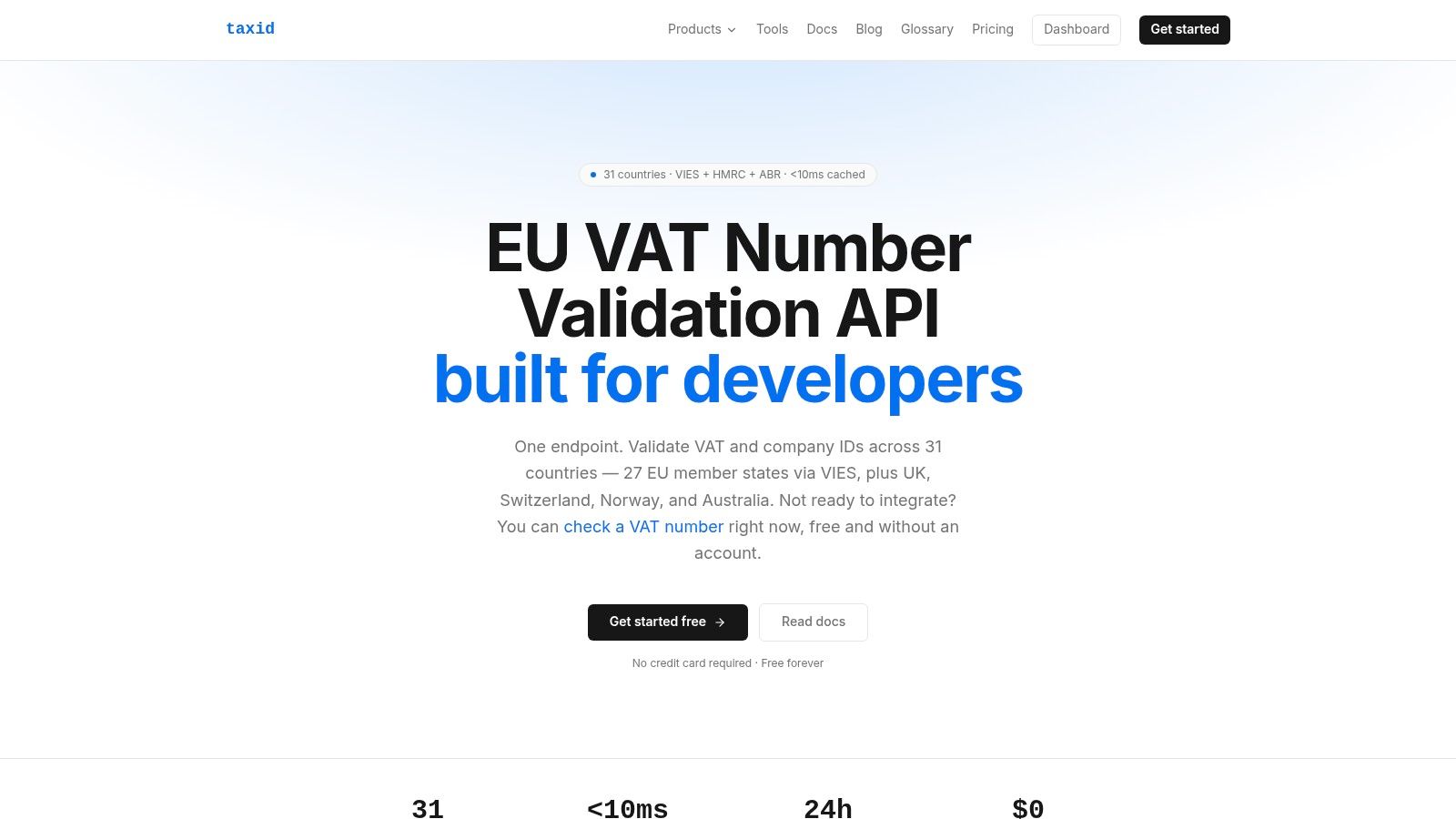
TaxID is designed for the developer who needs authoritative validation without wiring a billing workflow directly to a legacy government interface. It wraps the European Commission's VIES service in a modern REST API, returning validation status, registered company name, and address in JSON when those fields are available. Its stated coverage is 31 countries, including all 27 EU member states, the UK, Switzerland, Norway, and Australia, so it extends beyond the EU while remaining focused on tax and company identification.
That distinction matters. TaxID is not a general-purpose global company graph, and it doesn't try to replace enrichment tools. Its role is narrower and more operationally useful for SaaS billing, B2B invoicing, marketplace checkout, supplier checks, and KYC workflows that need an answer about an identifier.
A modern interface for an authoritative source
The API uses one REST endpoint and returns SDK-friendly JSON. Country-specific format checks can reject malformed input before a remote validation call, while machine-readable errors such as vat_invalid, service_unavailable, and country_not_supported make application handling more stable than parsing free-form SOAP messages.
TaxID also addresses the part of VIES integration that most comparison articles underplay, failure behavior. Redis-backed caching keeps validated results available for 24 hours, and cached responses are designed to return in under 10 milliseconds, which suits checkout fields where a slow request can interrupt payment or exemption logic. The cache improves resilience, but it creates a deliberate freshness trade-off: a cached result may not represent the issuing authority's latest state.
Practical rule: Treat a cached positive result as a controlled operational fallback, not as proof that an identifier can never change.
The underlying authority remains VIES. The European Commission describes VIES as a search engine that queries national VAT databases in real time, rather than as a single database containing every VAT number. That means TaxID can simplify integration and outage handling, but it can't make an unavailable member-state registry authoritative again.
Pricing and fit
TaxID offers a free tier of 100 validations per month without a credit card, followed by a $19 monthly Starter plan for 1,000 validations and a $49 monthly Growth plan for 10,000 validations, with custom enterprise pricing for higher volumes. These plan details are published on the TaxID website.
TaxID is a strong starting point when the core job is VAT or company-ID validation across its supported footprint, especially for Node.js, Python, React, Stripe, and custom checkout stacks. It isn't the right choice if you need global registry filings, officers, funding, or broad sales contacts.
2. OpenCorporates API
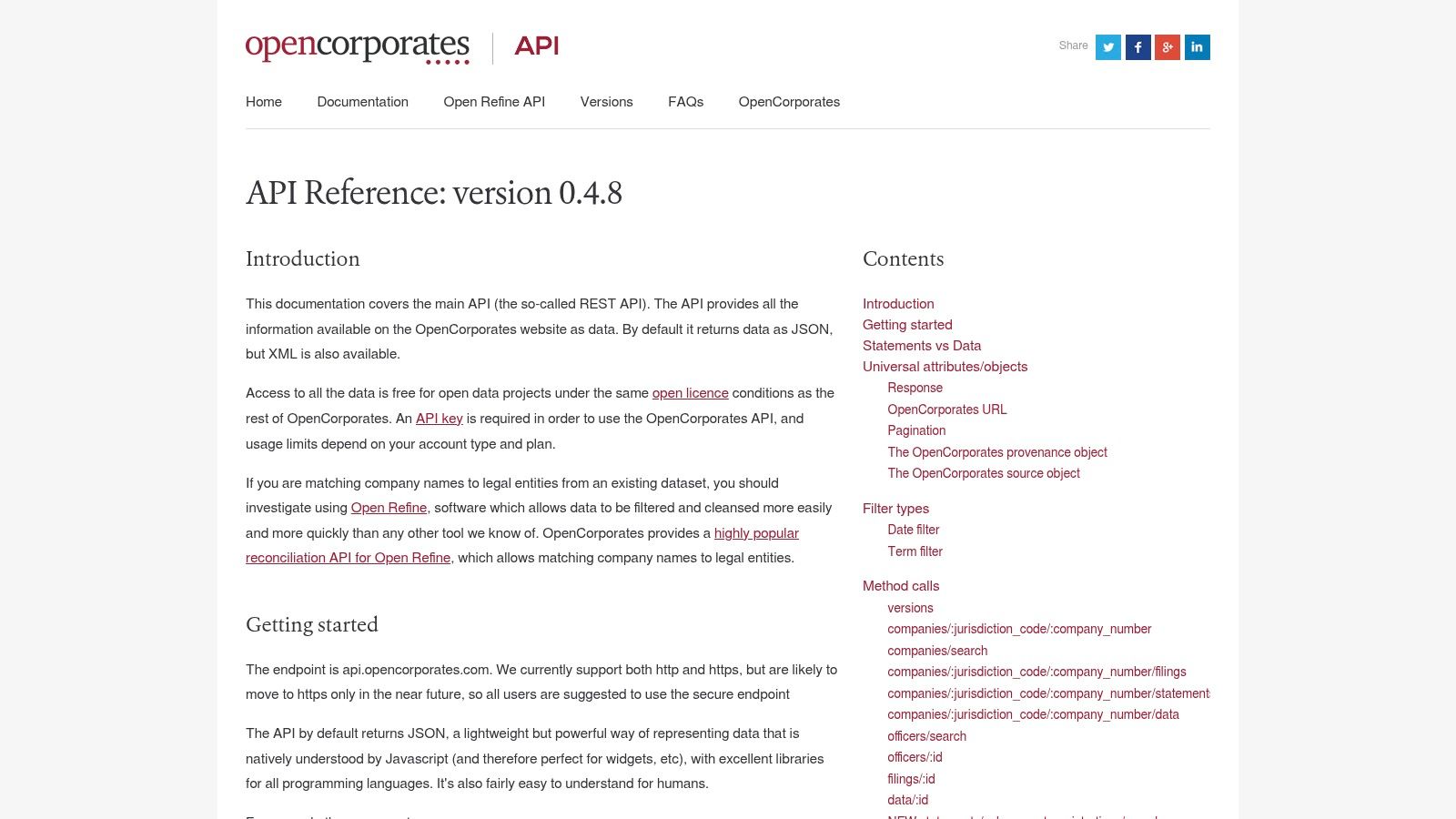
OpenCorporates is built for a different question: which legal entity is this, and what evidence connects it to an official register? Its API aggregates company and officer records from official registries across many jurisdictions, making it useful when a team needs cross-border discovery rather than one country's tax validation endpoint.
The API supports company and officer search, pagination, filtering, and REST-based retrieval. Provenance metadata and links back to source registers are especially valuable for compliance and investigation workflows because they let users distinguish a normalized record from the underlying register evidence. That doesn't make every field equally fresh. Source registries differ in update schedules, schemas, availability, and field completeness.
Where it fits
OpenCorporates is a sensible KYC or KYB starting point when the input may come from several countries and the application needs legal names, company numbers, status, officers, or source references. It can reduce the need to build separate integrations for every registry, but aggregation introduces a verification step of its own.
A company record found through OpenCorporates shouldn't automatically be treated as a VAT validation. A registry entry can establish that an entity exists while leaving tax registration, current VAT status, or transaction eligibility to a tax authority system.
Teams building a broader company data model should also separate identity evidence from commercial enrichment. The former supports compliance and entity matching. The latter supports lead routing, segmentation, and account research. OpenCorporates is much closer to the first category. Its API documentation describes the REST interface, search behavior, and available data model.
For implementation, plan around uneven response behavior and fields that vary by jurisdiction. Store the source register, retrieval timestamp, company number, and returned status alongside the normalized record. That audit trail is more useful than treating the API response as a permanently current master record.
The company data API guide is useful background for deciding whether this registry-oriented approach matches a VAT workflow or a wider entity research requirement.
3. UK Companies House Public Data API
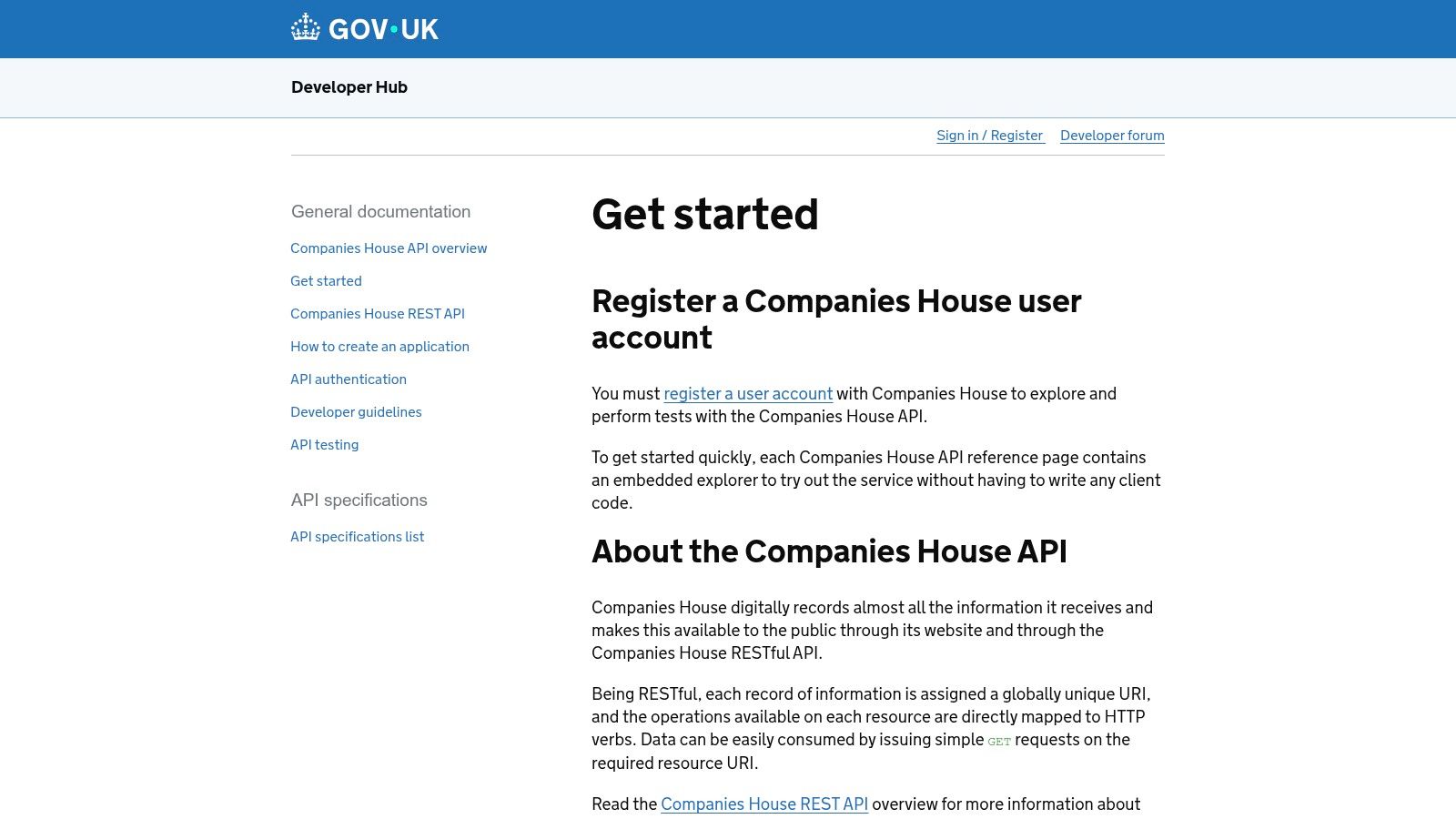
The Companies House API is the clearest choice in this list when the legal entity is British and the application needs depth from the official register. It exposes company names, company numbers, status, SIC codes, filings, charges, and Persons with Significant Control, alongside search and company-detail operations.
That field mix makes it more than a simple name lookup. A back-office system can use it to retrieve filing history, inspect charges, connect a company to its PSC records, and preserve a direct relationship with the UK register. For UK-focused KYC, supplier review, and administrative workflows, using the source authority directly avoids some of the ambiguity introduced by a commercial aggregation layer.
Strong authority, narrow geography
The API is free to access with an API key for public data, and Companies House provides developer guidance and documented rate limits through its official developer hub. Those limits become an architecture concern for bulk synchronization or high-volume search. Teams that need more throughput should discuss requirements with Companies House rather than assuming an unrestricted public endpoint.
The API is UK-only. It can complement VIES or OpenCorporates, but it can't validate an EU VAT number by itself and won't provide a unified cross-border schema. A multinational product will need country routing, field normalization, and a policy for what counts as authoritative in each market.
For a lookup by company number, preserve the returned number exactly and distinguish active, dissolved, and other statuses in your application. Don't collapse all non-active responses into “not found.” Legal status, filing history, and tax status are separate signals, and a company register shouldn't be used as a substitute for VAT validation.
The business registration number lookup guide provides useful context for separating registration-number searches from tax-ID checks. Companies House is particularly attractive when the product's first market is the UK and registry depth matters more than global coverage.
4. GLEIF LEI Lookup API
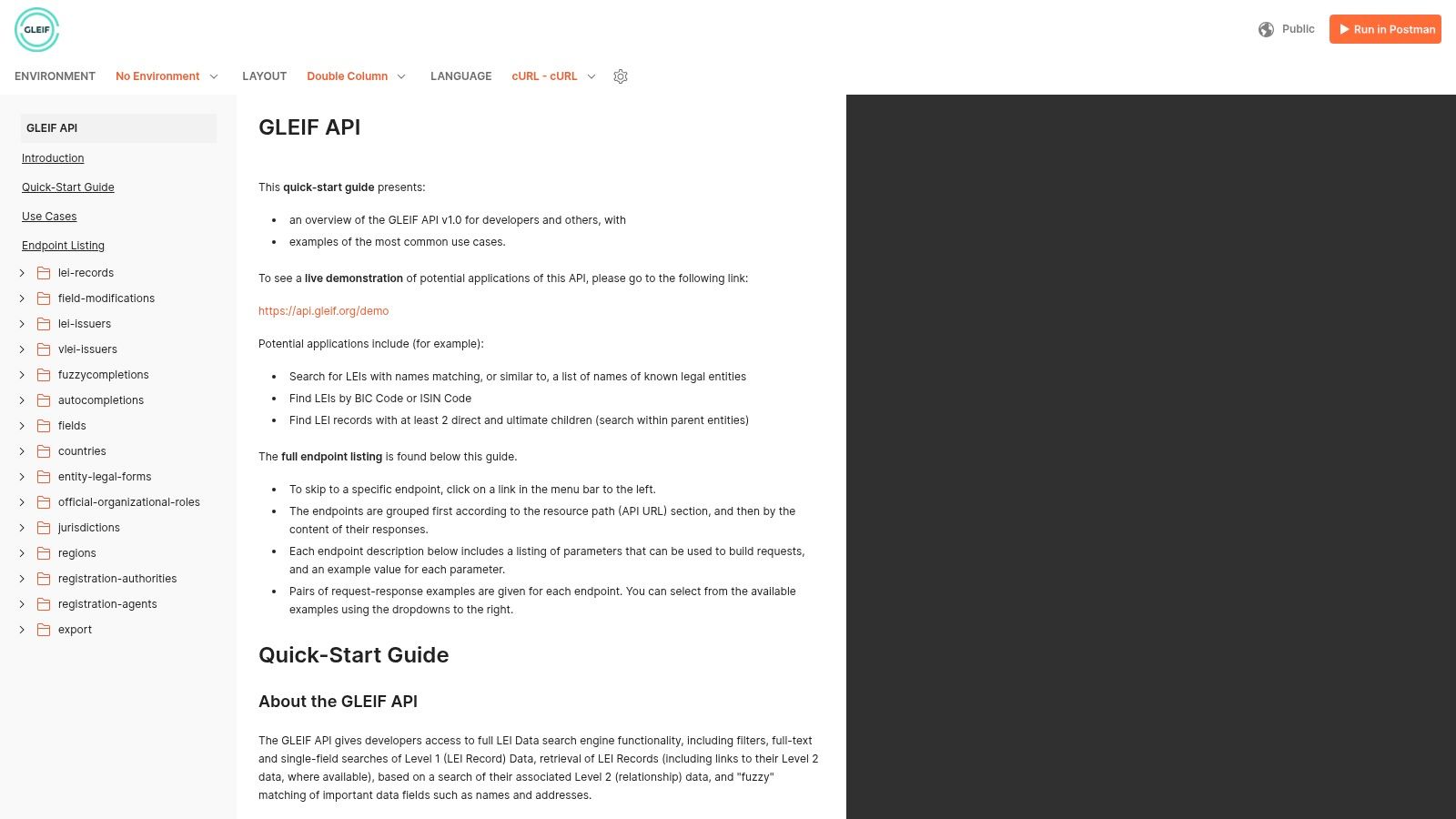
GLEIF addresses entity identity from a financial and cross-border perspective. Its API provides Legal Entity Identifier records, legal names, addresses, statuses, and relationship data where available. The identifier and normalization framework can help a financial-services application match entities that appear under different names across systems.
The API is open and free to use, with JSON retrieval, search, transparent change information, and a data-quality framework documented through the GLEIF API documentation. That combination makes it useful as an identity layer, particularly when an organization already has an LEI or when a workflow needs structured relationships between entities.
The identifier is the coverage boundary
GLEIF isn't a universal company directory. It covers entities that have LEIs, and coverage varies by country and sector. A failed LEI search therefore doesn't prove that a business doesn't exist, isn't VAT registered, or can't be matched through a national register.
That limitation is also what makes the data useful. An LEI record gives a team a stable identity reference and, where reported, relationship information that ordinary business-name searches often miss. A bank or marketplace can use it to improve deduplication and connect legal entities across internal systems, then use a national registry or VIES for jurisdiction-specific validation.
A strong entity-matching workflow uses the LEI as an identity signal, not as a universal substitute for every government register.
GLEIF is a good fit for financial institutions, KYB platforms, and cross-border matching projects. It's less suitable for a checkout field where a customer enters a VAT number and expects immediate confirmation. It also doesn't provide sales contacts, funding, or broad firmographic enrichment. For an address-specific lookup, pair the LEI record with a jurisdictional source, as explained in this business address lookup API guide.
5. INSEE SIRENE API
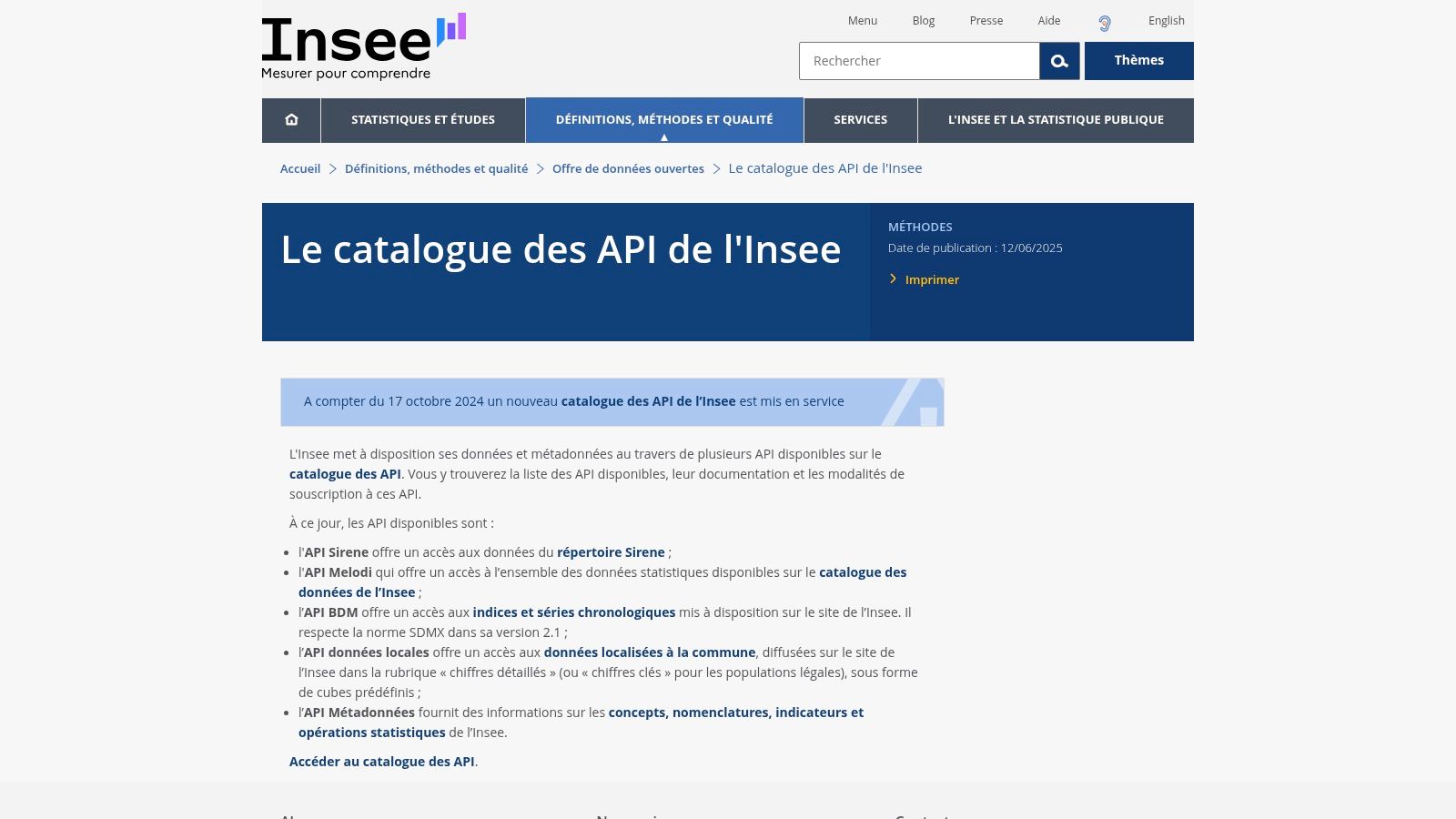
INSEE's SIRENE API is the official French enterprise and establishment register interface. It covers SIREN enterprise identifiers and SIRET establishment identifiers, with company identity, addresses, statuses, and historical records for France. That enterprise-versus-establishment distinction is important for French workflows because a legal entity and one of its operating locations aren't the same record.
The API is a strong choice for French administrative validation, directory synchronization, and internal systems that need national coverage from the source register. Its filtering capabilities also make it useful for building targeted datasets rather than retrieving one company at a time.
A national register, not a European abstraction
INSEE provides open access through a centralized portal, with documentation and regular updates described in its SIRENE API information. Developers should expect a France-specific data model and documentation that is primarily in French. Token registration through the portal is part of the setup.
SIRENE is authoritative for the French enterprise and establishment records it exposes, but it doesn't answer every tax question. A SIREN or SIRET lookup confirms identity and administrative status within the French register. It shouldn't automatically determine whether a VAT number is valid for a reverse-charge invoice.
The historical data is useful when an application needs to understand changes rather than only the current row. For example, a compliance system may need to retain what it observed at the time of onboarding, then compare later status changes without overwriting the original decision.
INSEE is best for a France-first product that values official national depth and can invest in a country-specific adapter. For a pan-European checkout, a multi-country validation layer usually reduces integration work, while SIRENE remains the better source for French registry detail.
6. Pappers Enterprise API
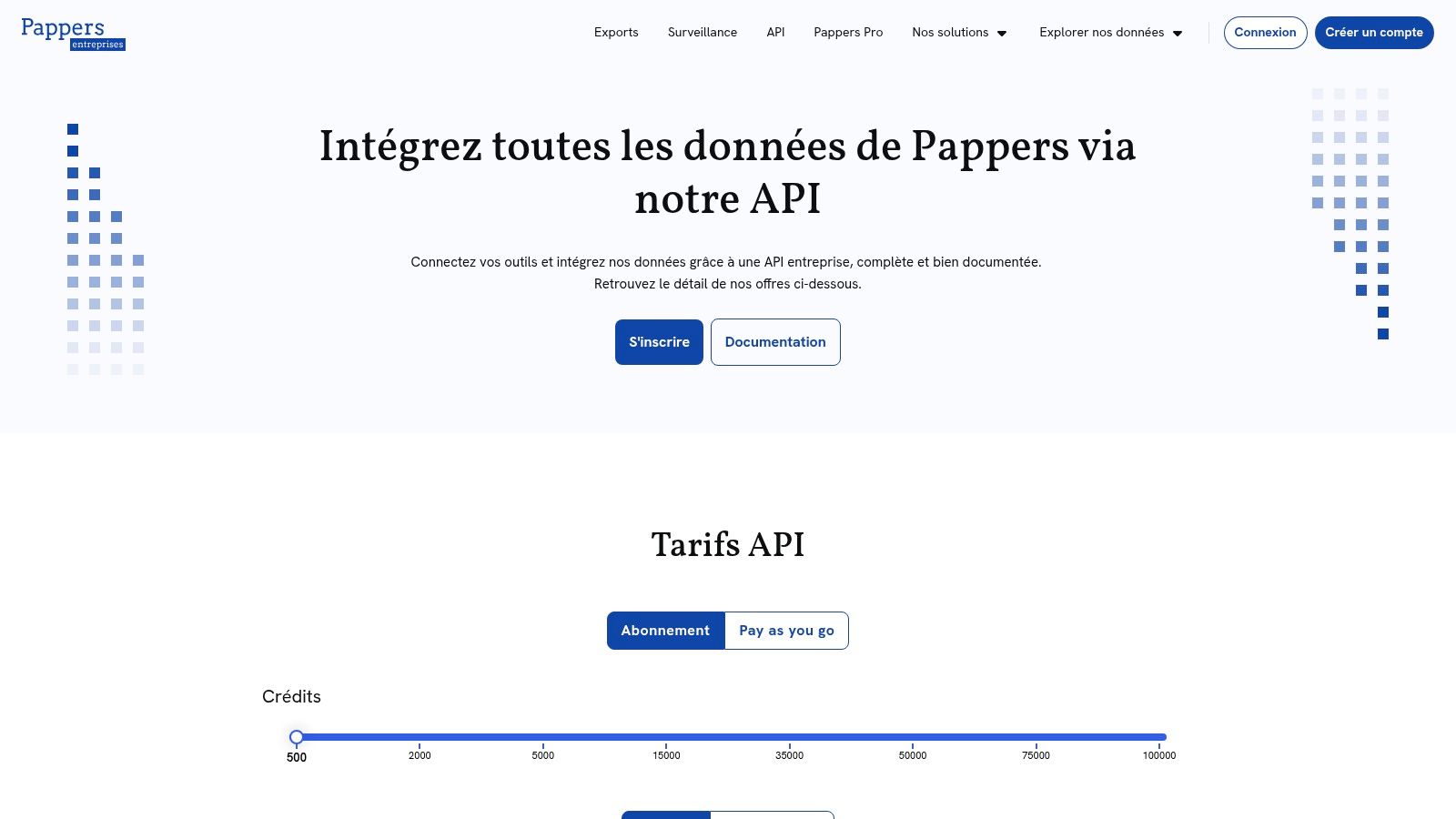
Pappers combines French company data and documents into a developer-facing API, drawing on sources including INSEE, INPI, and BODACC. Its French offering includes company search, legal filings, accounts, directors, and document retrieval. That makes it more useful for research and due diligence than a basic identifier validator.
Pappers also offers an international API covering multiple European countries under one key. The practical advantage is consolidation. A French SaaS company expanding into neighboring markets can keep one vendor relationship while adding coverage, rather than immediately building a separate connector for each jurisdiction.
Aggregation changes the authority question
For France, Pappers can provide a convenient access layer over important official sources. For international results, coverage and terms vary by country, and the data should be treated as an aggregation layer rather than automatically equivalent to a national register. That distinction matters if the returned record will support a legal decision, a tax treatment, or an audit.
The Pappers API offers search and document-oriented capabilities suited to analysts, compliance teams, and SaaS products that need more than a normalized company name. Its onboarding and documentation are designed for relatively quick integration, but country-specific testing remains necessary.
Use Pappers when filings, directors, accounts, and documents are part of the workflow. Don't choose it solely because a checkout needs a fast VAT answer. A document-rich response can be valuable for due diligence and supplier review while being unnecessary overhead for an inline invoice field.
A sensible architecture can combine Pappers for research with a dedicated VAT validator for transaction decisions. Store the provenance of each field and label the result as French official-source data, international aggregated data, or commercial enrichment. That prevents one convenient response object from becoming an overconfident legal record.
7. Enigma Businesses API
Enigma is centered on US business identity and firmographics rather than European tax validation. Its Businesses API supports entity matching and stable IDs, with information such as business names, locations, entity linkages, and payment-acceptance attributes. That profile suits a product trying to recognize small and midsize US businesses across inconsistent commercial records.
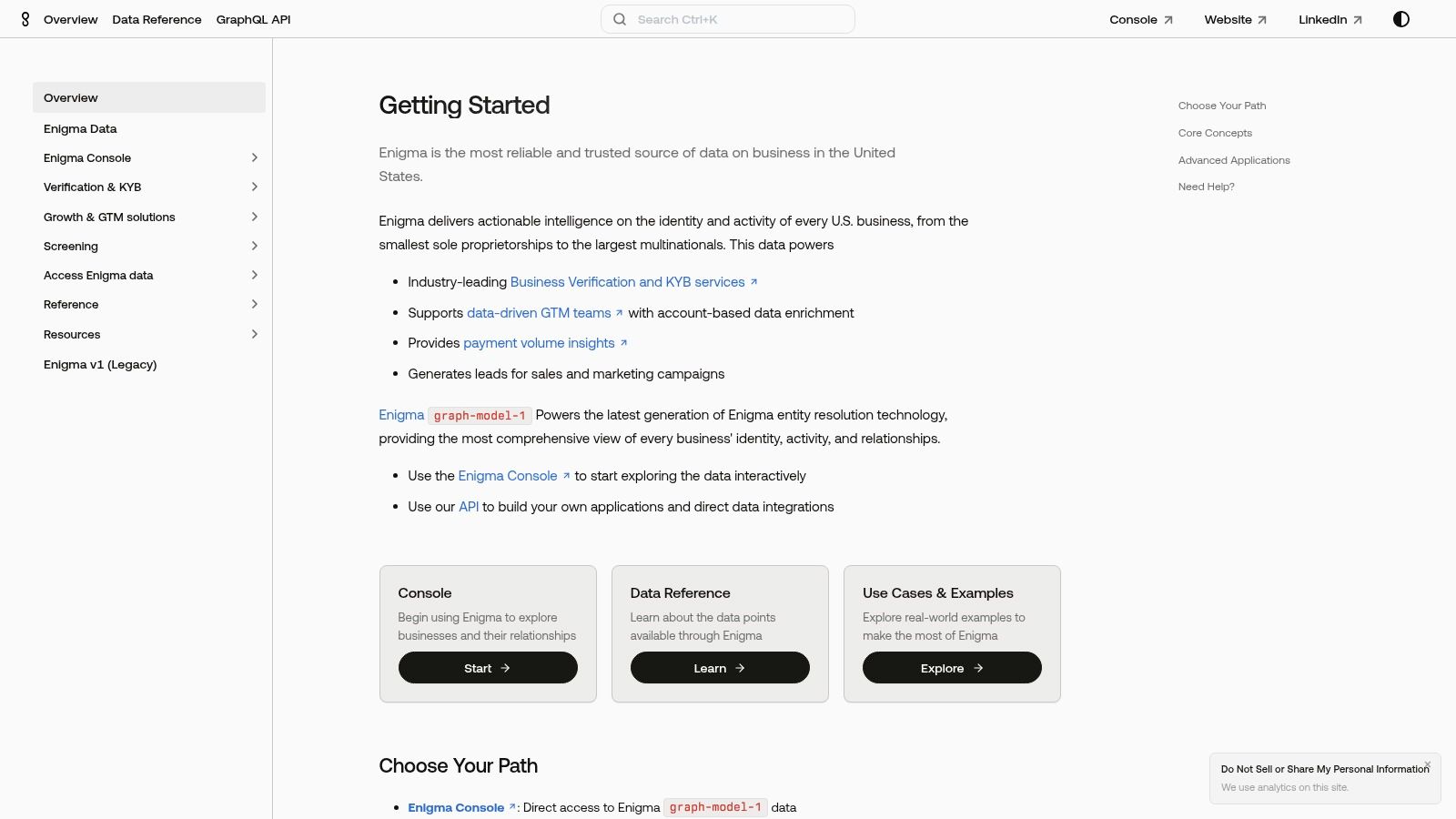
The API supports GraphQL and REST interfaces, schema introspection, an attribute catalog, a self-serve console, and bulk data options. Per-field pricing tiers help a team understand which attributes drive cost before it requests a broad payload. That level of visibility is useful for enrichment systems that don't need every field for every account.
Enrichment needs a different test
Enigma can complement official European or US registry data when the product needs fresh firmographics, entity matching, or commercial attributes. It shouldn't be the sole authority for legal identity, VAT status, or a regulated onboarding decision. The central question is whether the application needs a useful business profile or a government-confirmed status.
GraphQL gives clients control over fields and can reduce unnecessary payloads, but REST-only teams may need time to learn query construction and schema behavior. Before production, test matching against the names, addresses, and abbreviations that arrive from your customers. A polished schema won't resolve ambiguity if the source input is poor.
The Enigma documentation covers the API model and available tooling. Its US-centric scope means a European SaaS should treat it as a regional enrichment component, not a replacement for VIES, Companies House, INSEE, or another national source.
Enigma is most compelling when the application already has an authoritative identity layer and needs additional business context. That separation produces cleaner decisions: official sources establish who the entity is, while Enigma helps explain how the business operates.
8. Data Axle Business Database APIs
Data Axle provides commercial US business-directory data through APIs and related data products. Its records can include identities, locations, contacts, and business categories, making it useful for lead routing, territory assignment, account enrichment, and preliminary business searches.
This is a commercial dataset, not an official registry interface. That difference should control how the API is used. A sales workflow can use a category or contact field to prioritize an account, but a tax or legal workflow should verify the company through the appropriate government source before treating the result as authoritative.
Broad directory data, sales-led procurement
The platform offers business search and detail endpoints, multiple deployment options, and enterprise onboarding support. Pricing isn't publicly listed, so a buyer should request a proposal that separates licensing, API usage, refresh expectations, deployment, and support. Without that breakdown, comparing it with self-serve registry APIs is misleading.
The Data Axle APIs page is the right starting point for understanding its product scope. Ask specifically how records are sourced, how corrections are handled, what fields are covered in the target geography, and whether the contract permits the intended storage and reuse.
Data Axle is a fit when the business problem is commercial reach across the US. It isn't a direct competitor to TaxID or VIES for VAT validation, nor to Companies House for official UK filings. The best architecture may use Data Axle to discover or enrich a business, then pass a legal identifier to an authoritative registry or tax service.
That two-step pattern also reduces false confidence. A directory match can suggest that a business exists. It doesn't by itself prove that the entered tax number belongs to that business or that the business qualifies for a particular invoicing treatment.
9. Crunchbase API
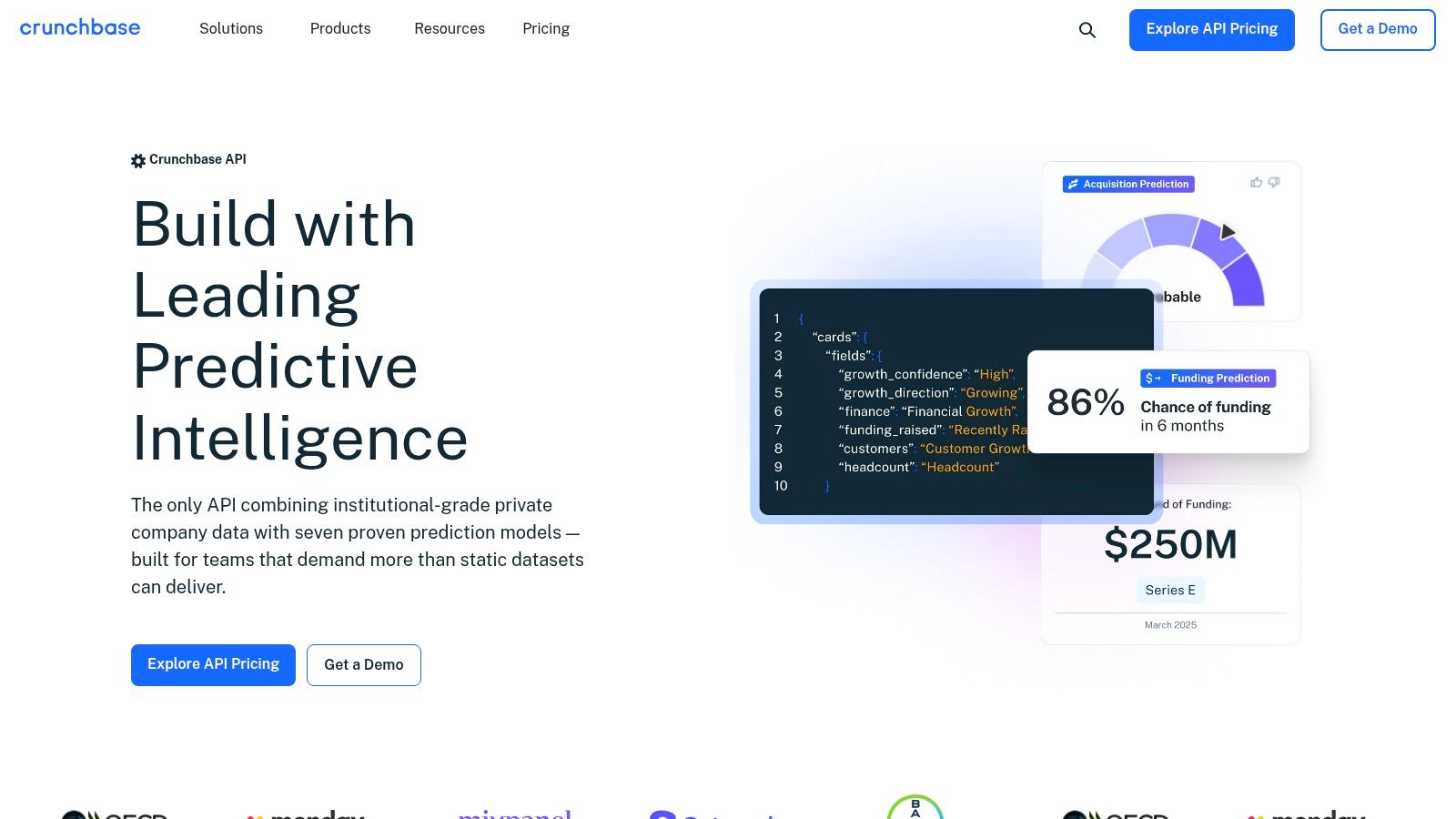
Crunchbase is an enrichment platform for private-company intelligence. Its organization search, entity lookup, and autocomplete tools support firmographic research, while company metadata can include funding, leadership, signals, and predictive fields on higher tiers. Those fields are valuable for go-to-market teams, market mapping, account scoring, and investment-related workflows.
The API isn't an official legal register. A Crunchbase organization record can help a sales team understand a company's market position, but it shouldn't be the sole evidence for a legal name, tax status, registered address, or reverse-charge decision.
Rich context, paid access
Crunchbase provides API usage dashboards and ecosystem support, but full API access requires a paid Enterprise or Applications license, with pricing handled through sales. That model makes procurement and field-level evaluation important. A team should confirm exactly which organization attributes, signals, and predictive features are included before designing its data model.
The Crunchbase API product page describes the organization and enrichment use cases. Buyers should also test how company names are matched across subsidiaries, brands, and parent entities. A commercial intelligence record may be excellent for account research while still needing a separate legal-entity mapping step.
Crunchbase is a strong choice when the outcome is prioritization, segmentation, or market intelligence. It is a poor choice for a checkout validator just because it contains a company name. Enrichment and verification have different freshness expectations, different evidence requirements, and different failure consequences.
Pairing Crunchbase with an official registry or VAT service produces a more defensible workflow. The registry establishes the legal identity. Crunchbase adds the commercial context that helps a sales or strategy team decide what to do next.
10. EU VIES VAT Information Exchange System API
VIES is the authoritative foundation for EU VAT-number validation. The European Commission describes it as a search engine that queries the national VAT databases of EU member states and Northern Ireland in real time, rather than as a standalone database holding every VAT number. It returns validity and, when available, the registered trader name and address.
The native interface is SOAP-based and exposes checkVat and checkVatApprox operations through the official WSDL. That makes VIES the canonical source for reverse-charge workflows and cross-border B2B VAT checks, but the integration model is older than the JSON interfaces most application teams now expect.
Authority with operational friction
VIES is free and authoritative for its intended VAT-validation job. It isn't a general company enrichment service, and it doesn't provide broad filings, officers, funding, contacts, or sales firmographics. A developer who calls it directly must also handle SOAP faults, national backend availability, retries, timeouts, and response interpretation.
The official VIES WSDL documents the native service. Its architecture depends on the availability and freshness of the issuing member state's database. Distinct failure states can indicate that a member state or the service is unavailable, rather than that the VAT number is invalid.
That distinction should shape the product experience. A temporary inability to verify is not the same decision as a confirmed invalid identifier. An application may need to hold an order for later review, preserve the entered number, or apply a defined fallback policy rather than reject a legitimate customer immediately.
VIES is the right choice when direct EU authority and in-house SOAP integration are acceptable. A modern wrapper is more suitable when the same authority is needed through REST, with caching, normalized errors, and a documented approach to temporary outages.
Company Lookup APIs, Top 10 Comparison
| Product | Core capability | Coverage & audience 👥 | Reliability & quality ★ | Pricing & value 💰 | Unique strengths ✨ |
|---|---|---|---|---|---|
| TaxID 🏆 | REST VAT & company ID validation; JSON name/address | 31 countries (EU + UK/CH/NO/AU) • 👥 SaaS, B2B billing, KYC | Redis 24h cache, sub‑10ms cached • ★★★★★ | 💰 Free 100/mo; $19/1k; $49/10k; enterprise | ✨ Single POST endpoint, format checks, Stripe‑style errors, caching |
| OpenCorporates API | Global registry aggregation: names, officers, provenance | Global registries • 👥 Compliance, research, KYC starter | Stable REST; field completeness varies by source • ★★★★ | 💰 Free tier; full access paid (can be costly) | ✨ Provenance links to source registers |
| UK Companies House API | Official UK register: names, filings, PSCs, documents | UK only • 👥 UK KYC & back‑office | Authoritative & up‑to‑date; rate limits apply • ★★★★★ | 💰 Free (API key); rate limits | ✨ Official register data, filings & PSCs |
| GLEIF LEI Lookup API | LEI records: legal name, address, relationships | Global where LEIs exist • 👥 Financial services KYC/KYB | High data quality; transparent change logs • ★★★★ | 💰 Free | ✨ Global LEI IDs and relationship graph |
| INSEE SIRENE API | France SIREN/SIRET enterprise & establishment data | France only • 👥 French legal & admin workflows | Authoritative national coverage; regularly updated • ★★★★★ | 💰 Free (token required) | ✨ National authoritative dataset, rich filters |
| Pappers Enterprise API | Enriched French company data, filings & docs; intl option | France + EU option • 👥 French SaaS; EU expansion | Developer‑friendly; mixed official/commercial sources • ★★★★ | 💰 Freemium; commercial tiers for docs/intl | ✨ Document retrieval; aggregated INSEE/INPI/BODACC |
| Enigma Businesses API | U.S. SMB firmographics, matching; GraphQL/REST | US‑centric • 👥 U.S. SMB enrichment, analytics | Fresh U.S. data; per‑attribute pricing • ★★★★ | 💰 Pay‑for‑what‑you‑use; per‑field tiers | ✨ GraphQL + attribute pricing; strong U.S. freshness |
| Data Axle Business APIs | Commercial U.S. directory: identities, contacts, categories | U.S. commercial • 👥 Marketing, lead routing, enrichment | Large dataset; vendor support but not official • ★★★ | 💰 Sales‑led pricing | ✨ Broad U.S. commercial coverage & services |
| Crunchbase API | Private‑company enrichment: funding, leadership, signals | Global private companies • 👥 GTM, lead scoring, market intel | Mature API; rich metadata; not authoritative legal • ★★★★ | 💰 Enterprise/apps license (paid) | ✨ Funding, signals & predictive fields for GTM |
| EU VIES (checkVat) | Official VAT validation (SOAP): validity + name/address | EU VAT only • 👥 VAT compliance & reverse‑charge | Authoritative but legacy SOAP & member outages • ★★★★ | 💰 Free | ✨ Canonical EU VAT validation (official source) |
Match the API to the Verification Job
The best company lookup API depends on what your application is being asked to prove. If the requirement is “can this customer provide a valid VAT number for this transaction?”, start with an authoritative tax-validation path. If the requirement is “what is this company's legal status, filing history, ownership, or parent relationship?”, choose a registry or identity source. If the requirement is “should sales prioritize this account?”, commercial enrichment is the relevant layer.
TaxID is the practical starting point for a developer who wants one modern endpoint for VAT and company-ID validation across its 31-country footprint, with JSON responses, caching, standardized errors, and transparent plans. It reduces the need to build a SOAP integration directly into a checkout or billing service while still relying on VIES for the underlying EU authority. The trade-off is scope. It isn't a global registry graph, and cached responses create a controlled freshness compromise during outages.
Use Companies House when the product is UK-focused and needs official company data, filings, charges, SIC codes, or PSC information. Use INSEE SIRENE when French SIREN and SIRET records, establishments, historical data, and national administrative coverage matter. These country-specific APIs provide deeper local context than a broad commercial abstraction, but they require country-specific integration and won't solve cross-border validation alone.
Use VIES directly when native EU VAT access is acceptable and your team is prepared to handle SOAP, member-state availability, response interpretation, and retry behavior. VIES is the ground truth for its intended VAT-validation role. It isn't the right tool for sales enrichment or a full legal-entity data model.
OpenCorporates and GLEIF serve broader identity needs, but in different ways. OpenCorporates offers cross-jurisdictional registry aggregation with provenance and officer data. GLEIF supplies normalized LEI records and relationships where entities have LEIs. Neither should be treated as a universal substitute for a tax authority or every national register.
Pappers, Enigma, Data Axle, and Crunchbase are more suitable when the product needs commercial context. Pappers adds French documents and an international aggregation option. Enigma focuses on US business matching and firmographics. Data Axle supplies commercial US directory data and contacts. Crunchbase adds private-company, leadership, funding, and signal data. These tools can make a CRM or account-scoring system much more useful, but they should not become the unannounced legal authority behind invoicing or regulated onboarding.
Before production rollout, test representative identifiers from every target country and include valid, invalid, malformed, inactive, and temporarily unverifiable cases. Measure the behavior that affects your users, including timeout handling, rate limits, field completeness, retry safety, and the difference between “invalid” and “couldn't verify.” Independent benchmarking illustrates why this matters: tested company lookup providers ranged from a 100.0% human-reviewed domain match rate across 282 companies to much slower response behavior, while the fastest tested provider recorded a 274 ms median latency. See the independent company lookup API benchmark for the reported methodology and results.
Your evaluation should also document authority and provenance. Record which source supplied each field, when it was retrieved, whether it came from a cache, and what your application does when a national registry is unavailable. A resilient workflow may accept an order but mark it for later revalidation, while a compliance decision may need to pause. Those policies should be explicit, not hidden inside a generic retry loop.
Finally, compare total operational cost rather than headline API price. Include engineering time, country adapters, monitoring, support, storage, cache policy, manual review, and the cost of rejecting a legitimate customer during an outage. For regulated onboarding, procurement can take longer than a simple API trial, and the provider must support the evidence and audit behavior your process requires. The universal winner doesn't exist. The right choice is the smallest combination of authoritative validation, official registry depth, identity normalization, and enrichment that matches the decision your application must make.
TaxID gives billing and checkout teams a REST-based VAT and company-ID validation layer, with VIES-backed results, structured company details, caching, standardized errors, and transparent plans. If you need to replace brittle SOAP handling or keep European billing flows usable during temporary VIES interruptions, visit TaxID and test it with the identifiers and failure cases from your production workflow.